Share this guide
Help more farmers discover useful tools
Save Time
Instant access
More Benefits
Apply for schemes
Better Decisions
Real-time data
Transparent & Safe
Official platforms
How Indian Farmers Can Sell Agricultural Produce Online: e-NAM, ONDC & Direct-to-Consumer
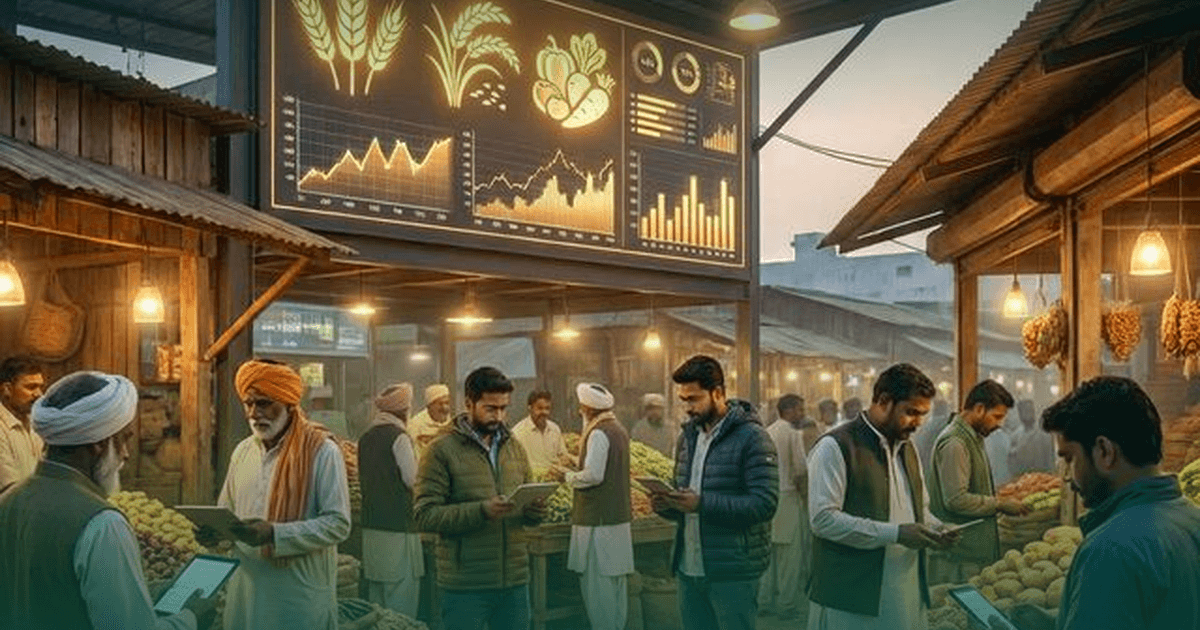
For decades, the Indian farmer's commercial universe ended at the gate of the local APMC mandi. Forced to accept whatever spot price local commission agents dictated on that morning, farmers typically captured only 25% to 35% of the final retail price paid by urban consumers, with the lion's share swallowed by multiple intermediary layers. Digital commerce is democratizing agricultural supply chains. Through the National Agriculture Market (e-NAM), the Open Network for Digital Commerce (ONDC), and direct-to-consumer (D2C) social commerce, individual growers and FPOs can sell farm produce directly to urban households, supermarket aggregators, and institutional processors.
1. Selling via the National Agriculture Market (e-NAM)
e-NAM is India's pan-India electronic trading portal integrating 1,360+ wholesale mandis into a unified single national market: | Stage | Process & Action Required | Farmer Benefit | |---|---|---| | 1. Registration | Register online at enam.gov.in with Aadhaar, Land Record, and active Bank Passbook | Receives a unique permanent e-NAM Farmer ID | | 2. Gate Entry & Assaying | Bring produce to any connected e-NAM mandi gate; receive an electronic gate-pass. Mandi lab tests moisture, grain size, and foreign matter within 45 minutes | Lab report is uploaded digitally with the lot; buyers bid based on certified quality rather than visual discounting | | 3. National Electronic Auction | Lot is listed on live bidding screens between 10:00 AM and 1:00 PM; accessible to 2.5 lakh registered buyers nationwide | Interstate buyers from Delhi or Mumbai can bid on your grain in Madhya Pradesh, generating competitive 10%–20% price premiums | | 4. Digital Payment | Trader deposits funds into the e-NAM clearing account; funds are disbursed via DBT directly into farmer's bank account | Eliminates bouncing cheques, delayed payments, or unauthorized commission cuts |
2. Tapping the Open Network for Digital Commerce (ONDC)
ONDC is the Indian government's open protocol designed to dismantle proprietary e-commerce monopolies, allowing any farmer, SHG, or FPO to list products that become visible across all consumer apps (Paytm, Pincode by PhonePe, Magicpin, Mystore):
- What to Sell: Packaged pulses, organic grains, cold-pressed oils, pure honey, dehydrated spices, and fresh fruit boxes. * How to Join: Onboard through an ONDC Seller Network Participant (such as Mystore, SellerApp, or government-backed FPO aggregators). * Delivery Integration: ONDC automatically links your orders to national logistics partners (Shiprocket, India Post, Delhivery) that pick up packages directly from your village farm-gate.
3. Direct-to-Consumer (D2C) Farm Branding via WhatsApp
Farmers located within 40 to 60 km of Tier-1 and Tier-2 urban hubs can build lucrative direct retail channels:
- WhatsApp Business Catalog: Photograph freshly harvested chemical-free vegetables, seasonal fruit crates (e.g., Alphonso mangoes, strawberries, guava), and cold-pressed oils. List transparent pricing per kg. 2. Apartment Housing Society Tie-Ups: Connect with Resident Welfare Associations (RWAs) in urban gated communities. Offer scheduled weekly "Farm Fresh Saturday Morning Deliveries" where produce harvested on Friday evening is delivered directly to society gates. 3. Unit Economics: Selling chemical-free tomatoes at ₹40/kg directly to apartment residents yields 2.5x more profit compared to selling at ₹15/kg wholesale in the mandi yard.
4. Post-Harvest Packing & Transport Checklist
- Crates vs. Gunny Bags: Replace conventional gunny bags with ventilated plastic crates for perishable fruits and vegetables, reducing mechanical transit bruising from 25% down to under 3%. * Hermetic Grain Storage Bags: Utilize multi-layer hermetic grain bags (PICS bags) for storing pulses, basmati rice, and wheat. The oxygen-deprived inner atmosphere suffocates grain weevils without requiring poisonous chemical aluminium phosphide (Sulphas) tablets.
Frequently Asked Questions (FAQ)
Q1: Does an individual farmer need a GST registration to sell raw agricultural produce online? No. Raw, unprocessed agricultural produce (such as fresh fruits, vegetables, unprocessed wheat, paddy, pulses, and raw cotton) is completely exempt from GST in India. An individual farmer only requires an Aadhaar and a PAN card to trade online.
Q2: What is an Electronic Negotiable Warehouse Receipt (e-NWR)? If market prices are depressed during peak harvest, you can deposit your grain in a WDRA-accredited warehouse and receive a digital e-NWR receipt. You can pledge this electronic receipt to secure an immediate 70% bank loan to meet urgent household cash needs, and sell the grain online on e-NAM when prices recover months later.
Direct Kisan Mandi
Sell or Source Direct from Verified Farmers
Connect with verified buyers and sellers across Indian mandis with zero brokerage on KhetiSetu Marketplace.
K
Written by KhetiSetu Agritech & Market Linkage Team
Empowering Indian farmers with scientific agronomy, ICAR guidelines, and transparent digital tools.