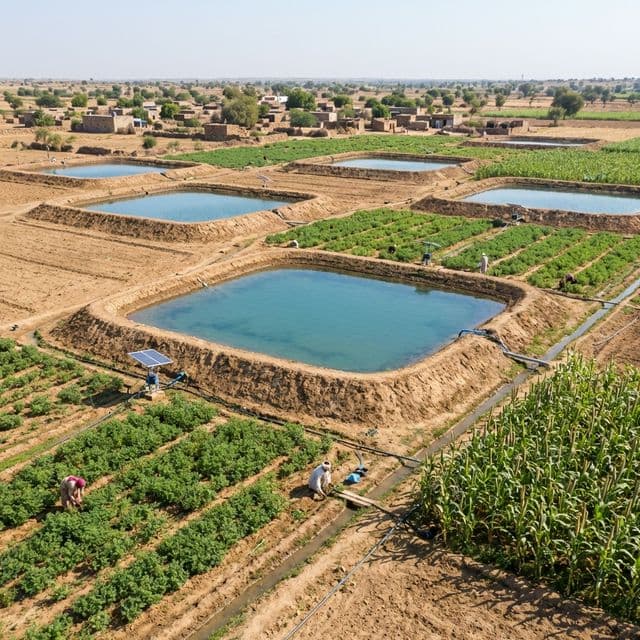
Adoption of integrated farming systems for improving productivity and minimizing risks associated with climatic variability.
Building Resilience in Rainfed Farming
Rainfed Area Development (RAD) is a component of the National Mission for Sustainable Agriculture (NMSA). It aims to make agriculture more remunerative in rainfed areas by promoting Integrated Farming Systems (IFS) and diversifying farm income.
Integrated Farming System (IFS): The core of RAD is IFS, which combines crops with other activities: - Crops + Horticulture: Growing fruit trees alongside seasonal crops. - Crops + Livestock: Integrating cattle, goats, or poultry for organic manure and additional income. - Crops + Fishery: Utilizing farm ponds for fish rearing. - Crops + Agro-forestry: Planting timber or fodder trees on field boundaries.
Key Objectives: 1. Risk Minimization: Diversification ensures income even if one component (like main crops) fails due to lack of rain. 2. Soil Health: Recycling of organic waste from livestock improves soil fertility. 3. Productivity: Optimal use of natural resources in rainfed regions. 4. Climate Resilience: Adoption of drought-resistant varieties and water-harvesting techniques.
Financial Support: Farmers receive subsidies for setting up integrated systems, building small water harvesting structures, and purchasing specialized equipment for rainfed farming.