Agriculture Infrastructure Fund (AIF): ₹1 Lakh Crore Loan Scheme
₹1 lakh crore AIF scheme: 3% interest subvention and CGTMSE guarantee on loans up to ₹2 crore for farmers, FPOs and cooperatives post-harvest infrastructure.
Overview
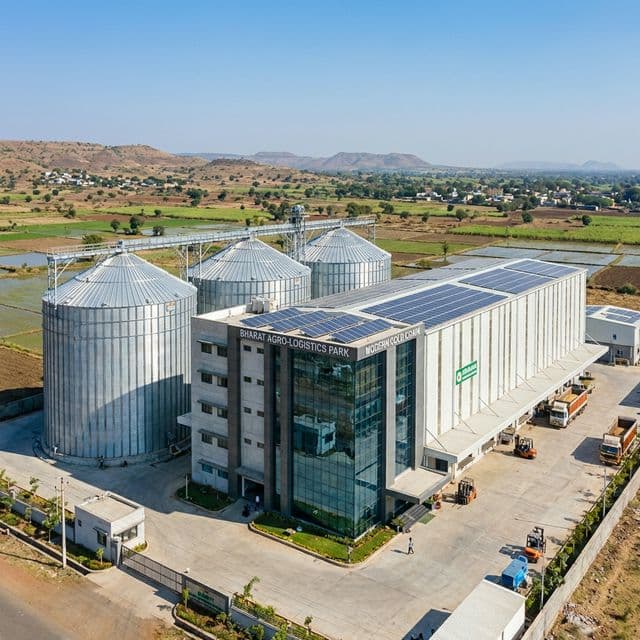
The Agriculture Infrastructure Fund (AIF) is a medium-to-long-term debt financing facility approved by the Union Cabinet on 1 July 2020 and administered by the Department of Agriculture and Farmers Welfare (DA&FW), Ministry of Agriculture and Farmers Welfare, Government of India. It provides a corpus of ₹1 lakh crore to catalyze investment in post-harvest management infrastructure and community farming assets across the country. The scheme is designed to reduce post-harvest losses, give farmers better access to organized markets, and draw private and cooperative investment into supply-chain infrastructure such as cold storage, warehousing, and primary processing units. The loan-disbursement window has since been extended from 4 to 6 years (up to 2025-26), while the 3% interest subvention and credit guarantee support already sanctioned will continue to be honoured until 2032-33.
Key Benefits
- Interest Subvention: 3% per annum interest subvention on loans up to ₹2 crore per project, for a maximum of 7 years from the date of first disbursement.
- Credit Guarantee: Coverage under CGTMSE (Credit Guarantee Fund Trust for Micro and Small Enterprises) for eligible loans up to ₹2 crore, with the government paying the guarantee fee — reducing or removing the need for collateral for many borrowers.
- No Processing Fee: Lending institutions do not charge a processing fee on AIF loans up to ₹2 crore.
- Flexible Moratorium: A moratorium on principal repayment, structured to match the project's expected cash flow, in addition to the normal loan tenure.
- Wide Lender Network: Loans can be availed from Scheduled Commercial Banks, Regional Rural Banks, Small Finance Banks, Cooperative Banks, and NBFCs/NCDC-eligible lenders empanelled on the AIF portal.
- Convergence Allowed: Beneficiaries may combine AIF financing with other central or state subsidy schemes (for example PMFME or PM-FMEGP), subject to overall project-viability norms.
What Projects Qualify
- Storage Infrastructure: Cold storages, warehouses, silos, and ripening chambers.
- Primary Processing Units: Sorting, grading, assaying, waxing, and packaging facilities.
- Community & Smart-Farming Assets: Custom hiring centres for farm machinery, precision-farming equipment, and e-marketing/collection points.
- Logistics Infrastructure: Reefer vans and aggregation hubs for perishable produce.
Eligibility Criteria
AIF financing is open to a wide range of beneficiaries, including:
- Individual farmers, Farmer Producer Organisations (FPOs), and federations of FPOs.
- Primary Agricultural Credit Societies (PACS), Marketing and Multipurpose Cooperative Societies, and their state/national-level federations.
- Self Help Groups (SHGs), Joint Liability Groups (JLGs), and SHG federations.
- Agri-entrepreneurs, start-ups, and agri-tech companies.
- Agricultural Produce Market Committees (APMCs), state agencies, and Public-Private Partnership (PPP) projects sponsored by central or state governments.
Applicants must submit a bankable Detailed Project Report (DPR) and should not have defaulted on any earlier institutional loan.
Documents Required
- Bank's prescribed loan application form or Customer Request Letter for AIF financing, duly filled and signed.
- Detailed Project Report (DPR), prepared in the format available on the AIF portal.
- Identity proof of the promoter/partners/directors (Aadhaar, PAN, Voter ID, or Driving Licence).
- Address proof, both residential and of the registered business/office.
- Proof of constitution or registration of the applicant entity (for FPOs, cooperatives, SHGs, or companies).
- Land ownership document or lease/rental agreement for the proposed project site, where applicable.
- Bank account details, and recent financial statements for existing enterprises.
How to Apply
- Register Online: Visit the official AIF portal at agriinfra.dac.gov.in and complete Beneficiary Registration using your mobile number and Aadhaar-linked OTP to generate a Beneficiary ID.
- Prepare the DPR: Download the Detailed Project Report template from the portal and prepare your project proposal, including cost estimates, cash flow projections, and repayment capacity.
- Submit Application: Log in with your Beneficiary ID, enter project and promoter details, select your preferred lending institution, and upload the DPR along with the required documents.
- PMU Screening: The application is reviewed by the Central Project Management Unit (PMU) at the Ministry before being forwarded to the chosen bank or lending institution for credit appraisal.
- Sanction & Disbursement: On approval, the lending institution disburses the loan; the interest subvention and CGTMSE guarantee claims are processed through the AIF portal by the lender.
- Track Status: Applicants can check their application status anytime by logging in to the portal with their Beneficiary ID. For queries, the helpdesk can be reached at support.agriinfra@gov.in.
Important Points
- The 3% interest subvention and CGTMSE guarantee benefit apply only to the first ₹2 crore of a project loan; any amount beyond this is on the lender's normal commercial terms.
- A single applicant can avail AIF financing for more than one eligible project, with the subvention benefit applying separately to each sanctioned project within overall fund guidelines.
- The moratorium and repayment schedule are approved based on the project's own revenue cycle, so an accurate DPR is essential.
- The scheme's loan-disbursement window runs till 2025-26, but interest subvention and credit guarantee commitments already sanctioned continue to be honoured till 2032-33.
- Guidelines, the list of empanelled lenders, and the DPR format are revised periodically — always check the official AIF portal for the latest version before applying.
Frequently Asked Questions (FAQs)
What is the Agriculture Infrastructure Fund (AIF)?
AIF is a ₹1 lakh crore central government financing facility, approved in 2020, that offers subsidized-interest loans to build post-harvest management infrastructure and community farming assets such as cold storage, warehouses, and processing units.
Who is eligible to apply for AIF financing?
Individual farmers, FPOs and their federations, PACS, marketing and multipurpose cooperative societies, SHGs, JLGs, agri-entrepreneurs, start-ups, APMCs, and eligible state/PPP projects can all apply, provided they have a viable Detailed Project Report.
What is the maximum loan amount eligible for interest subvention?
The 3% per annum interest subvention and CGTMSE credit guarantee apply to the first ₹2 crore of a sanctioned project loan, for up to 7 years from the date of first disbursement.
Is collateral required for loans under AIF?
For eligible loans up to ₹2 crore, the government bears the CGTMSE guarantee fee, which removes or significantly reduces the collateral requirement for most borrowers. Loans above this limit follow the lender's normal collateral policy.
Can FPOs or cooperatives apply, or is AIF only for individual farmers?
AIF is open to a wide range of institutional applicants, not just individual farmers — FPOs, PACS, cooperative societies, SHGs, JLGs, and their federations are all eligible beneficiaries.
What type of projects are not covered under AIF?
AIF is meant for post-harvest management infrastructure and community farming assets; it does not finance on-farm production activities such as general crop cultivation, livestock rearing, or purchase of agricultural land.
How long does it take to get an AIF loan sanctioned?
Timelines vary by lending institution and project complexity, but after PMU screening, sanction typically follows the bank's standard project-appraisal process once a complete DPR and documents are submitted.
Can a farmer avail AIF financing along with other government subsidy schemes?
Yes, AIF financing can generally be combined with other central or state subsidy schemes such as PMFME or PM-FMEGP, subject to the overall project cost and viability norms set by the lending institution and the scheme guidelines.