Share this guide
Overview Early Blight is caused by the fungus Alternaria solani. It is one of the most common tomato diseases, appearing nearly every season wherever tomatoes are grown. It can cause significant defoliation, leading to reduced yields and sunscalded fruit.
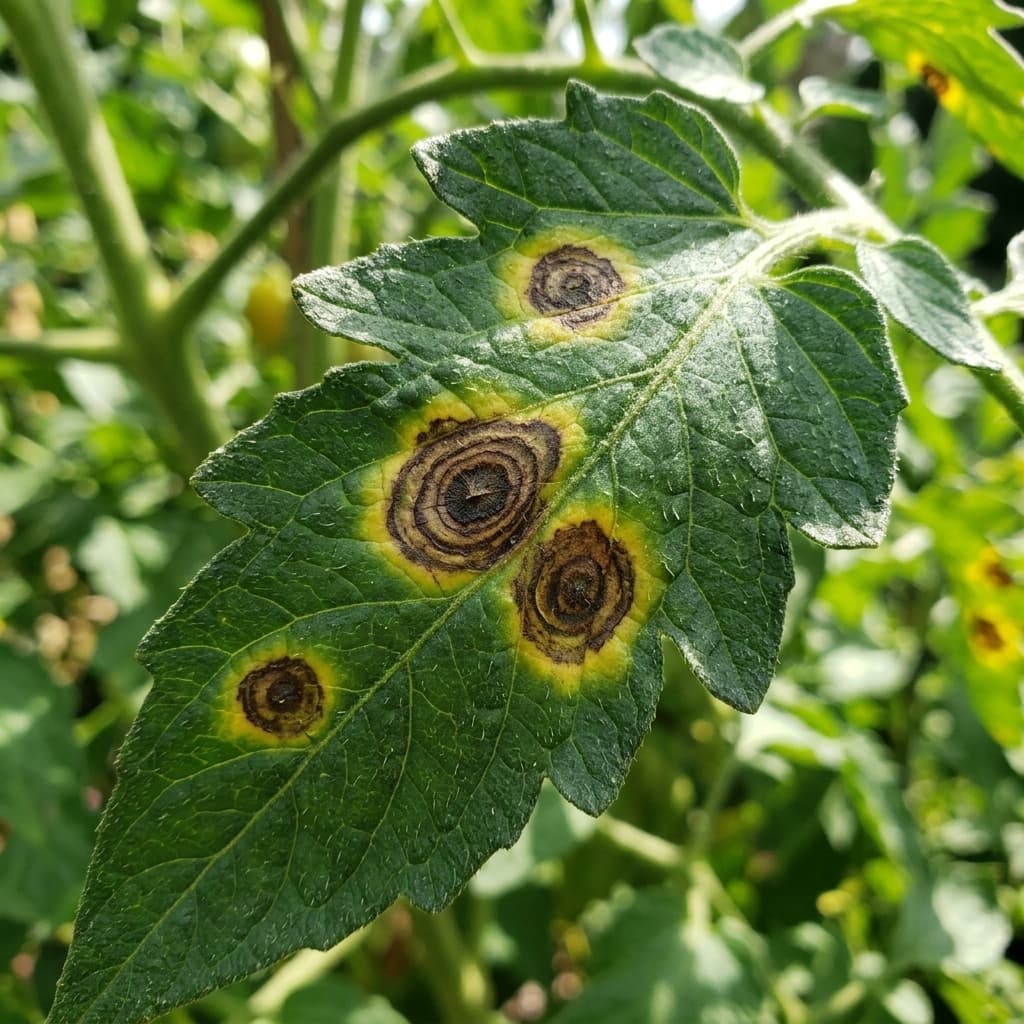
Key Symptoms - Lower Leaves First: The disease starts on older, lower leaves as small brown or black spots. - Concentric Rings: As spots enlarge, they develop concentric rings, giving them a target-board appearance. - Yellowing: The leaf tissue surrounding the spots turns yellow, and soon the entire leaf dies and falls off. - Stem & Fruit Infection: Dark, sunken lesions can appear at the soil line on stems, and leathery black spots can occur near the fruit stem.
Favorable Conditions - Warm temperatures (24-29°C) and wet weather (rainfall, heavy dew, overhead irrigation). - Stressed or poorly-nourished plants are more susceptible.
Organic Management & Control 1. Crop Rotation: Practice a 3-year crop rotation. Do not plant tomatoes, potatoes, eggplants, or peppers in the same spot consecutively. 2. Proper Spacing: Space plants to allow good air circulation. This helps leaves dry quickly. 3. Mulching: Apply organic mulch (straw or dried leaves) to prevent fungal spores in the soil from splashing onto the lower leaves. 4. Pruning: Prune lower branches (up to 12 inches from the ground) once the plant is established. 5. Baking Soda Spray: Mix 1 tablespoon of baking soda, 1 teaspoon of vegetable oil, and a few drops of mild liquid soap in 1 gallon of water. Spray weekly. 6. Copper Fungicide: Organic certified copper sprays can be used as a preventative measure or at the first sign of disease.
K
Prepared by KhetiSetu Agri-Expert
KhetiSetu Plant Clinic Expert Team verifying and curating agricultural disease data for farmers.