Share this guide
Complete Soil Testing Guide: Scientific Sampling & Health Card Interpretation
Soil is a living, dynamic ecosystem. Uninformed, unbalanced application of chemical fertilizers (especially excessive Urea) without knowing baseline soil fertility has depleted Soil Organic Carbon (SOC) across India below 0.4%, induced severe micronutrient deficiencies (Zinc, Boron, Iron), and degraded soil micro-flora.
Conducting a Soil Test once every 2–3 years cuts fertilizer expenses by 20–30% and restores balanced crop nutrition.
1. Scientific Soil Sampling Methodology (The Zig-Zag Method)
A laboratory analysis is only as accurate as the soil sample taken from the field:
- Sampling Time: Collect samples after crop harvest and before basal fertilization when the field is in a plowable condition.
- Sampling Pattern: Walk in a zig-zag pattern across the field, selecting 8 to 12 representative sampling spots per acre. Avoid areas near tree trunks, compost pits, irrigation channels, and field fences.
- Depth of Sampling:
- Field crops (wheat, paddy, pulses, cotton): 0 to 15 cm (0–6 inches) depth.
- Horticultural orchards (mango, citrus, pomegranate): Collect stratified samples at 0–30 cm, 30–60 cm, and 60–90 cm.
- V-Shaped Cut: Clear surface dry litter. Dig a V-shaped pit to 15 cm depth. Shave a 2 cm uniform slice of soil from the face of the exposed pit from top to bottom.
- Quartering Method: Mix all 10–12 samples thoroughly on a clean plastic tarpaulin. Divide the circular heap into four equal quarters. Discard opposite quarters. Repeat quartering until approx. 500 grams of composite sample remains.
- Drying & Packaging: Air-dry the sample in shade (never in direct sun). Pack in a clean cloth bag labeled with farmer name, Aadhaar, survey number, and GPS coordinates.
2. Key Soil Health Card Parameters & Critical Benchmarks
| Soil Parameter | Normal Desirable Range | Low / Deficient (Corrective Action) | High / Toxic (Corrective Action) | |---|---|---|---| | pH (Reaction) | 6.5 – 7.5 (Neutral) | < 6.5 (Acidic): Apply Agricultural Lime (CaCO₃) | > 8.5 (Alkaline/Sodic): Apply Agricultural Gypsum (CaSO₄·2H₂O) | | EC (Salinity) | < 1.0 dS/m | Normal | > 2.0 dS/m: Toxic salts; provide deep drainage & leach with fresh water | | Organic Carbon (OC)| 0.50% – 0.75% | < 0.50%: Apply 5 tonnes FYM/vermicompost, green manure with Dhaincha | > 0.75%: Healthy soil organic matter | | Available Nitrogen (N)| 280 – 560 kg/ha | < 280 kg/ha: Increase nitrogenous fertilizers by 25% | > 560 kg/ha: Reduce Urea application | | Available Phosphorus (P)| 10 – 25 kg/ha | < 10 kg/ha: Apply DAP/SSP enriched with PSB (Phosphate Solubilizing Bacteria) | > 25 kg/ha: Skip basal phosphate | | Available Potassium (K)| 120 – 280 kg/ha | < 120 kg/ha: Apply MOP (Muriate of Potash) | > 280 kg/ha: Reduce potash application | | Available Zinc (Zn) | 0.6 – 1.2 ppm | < 0.6 ppm: Apply 10 kg Zinc Sulphate (21%) per acre | Normal |
Calculate precise nutrient replacement for your field using the KhetiSetu Fertilizer Calculator and discover national assistance under the Soil Health Card Scheme.
Suspect Crop Disease in Your Field?
Upload a leaf photo to our AI Plant Clinic for instant disease identification and ICAR-approved remedies.
Written by KhetiSetu Agronomy Research Team
Agricultural expert and content creator dedicated to empowering farmers with ICAR-backed techniques, market insights, and sustainable practices.
Explore All GuidesRelated Agricultural Guides
Continue learning with hand-picked agronomic guides
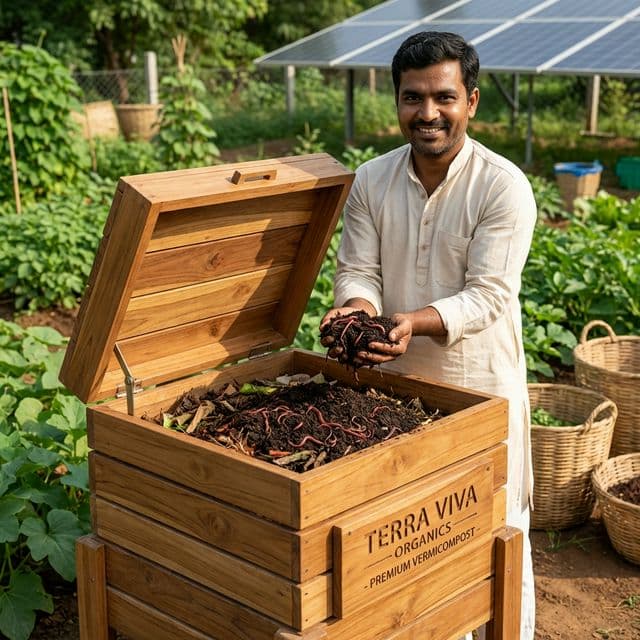
Vermicompost: Earthworm Magic
Harness the power of earthworms to create premium organic fertilizer that boosts soil drainage and nutrient availability.
Wheat Cultivation in India: High-Yield Sowing, Nutrient & Harvest Guide
Complete scientific guide for wheat farming in India: Sowing window, seed treatment, CRI stage irrigation, NPK split, weed management, and harvesting loss reduction.
Tractor Tillage Implements Guide: Mouldboard Plough vs. Rotavator vs. Cultivator
Practical engineering and economics guide comparing primary and secondary tillage tools: Mouldboard (MB) Plough, Rotavator, Rigid Cultivator, Disc Harrow, tractor horsepower matching, and diesel consumption per acre.