Share this guide
Help more farmers discover useful tools
Save Time
Instant access
More Benefits
Apply for schemes
Better Decisions
Real-time data
Transparent & Safe
Official platforms
Growing Green: Organic Solutions for Healthier Crops
Introduction: In today's agriculture, moving towards organic practices is more important than ever. For Indian farmers, adopting organic solutions means healthier crops, improved soil, and a reduced reliance on expensive chemical inputs. Let's explore how you can grow green and reap the benefits.
Boosting Soil Health with Compost
Compost is a fantastic natural fertilizer and soil conditioner. By incorporating compost into your fields, you're enriching the soil with essential nutrients and beneficial microbes. This leads to stronger, more resilient plants. You can create your own compost using kitchen waste, farmyard manure, and crop residues. Regularly applying compost improves soil structure, water retention, and overall fertility, naturally boosting your crop yields.
Natural Pest Control Strategies
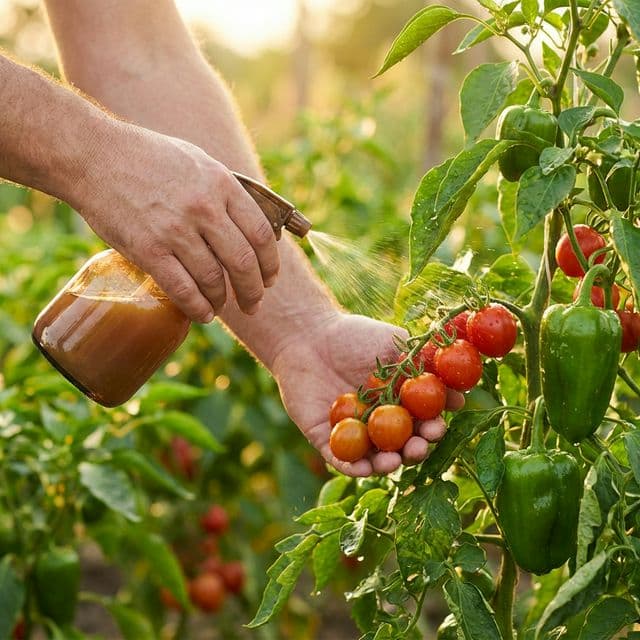
Instead of relying on harmful chemical pesticides, explore natural pest control methods. Introduce beneficial insects like ladybugs to prey on aphids, or use neem oil as a natural insecticide. Crop rotation can also disrupt pest cycles and prevent infestations. Companion planting, such as marigolds near vegetables, can repel pests naturally. These methods are cost-effective, environmentally friendly, and protect your crops without harming beneficial insects or the environment.
Conclusion: Embracing organic solutions is a win-win for Indian farmers. By focusing on soil health and natural pest control, you can cultivate healthier crops, reduce costs, and contribute to a more sustainable future for agriculture. Start small, experiment, and witness the positive transformation on your farm!
Sell or Source Direct from Verified Farmers
Connect with verified buyers and sellers across Indian mandis with zero brokerage on KhetiSetu Marketplace.
Written by KhetiSetu Agri-Expert
Empowering Indian farmers with scientific agronomy, ICAR guidelines, and transparent digital tools.