Share this guide
Black Gold for Your Soil: The Power of Organic Compost
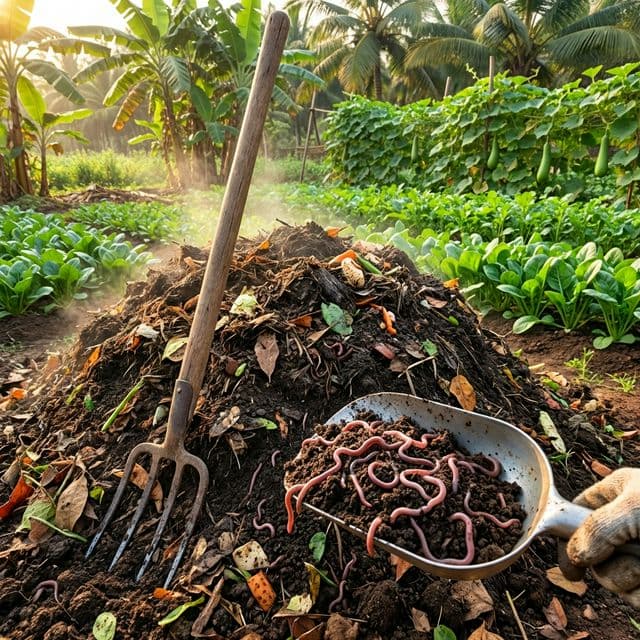
Organic compost is the backbone of healthy, sustainable farming. Instead of burning crop residues or letting kitchen waste rot in the open, you can transform it into "Black Gold" that feeds your soil microbes.
1. The Ingredients: Greens and Browns A perfect compost pile needs a balance: - Greens (Nitrogen-rich): Vegetable peels, fruit scraps, fresh cow dung, and green leaves. - Browns (Carbon-rich): Dry straw, shredded cardboard, dry leaves, and wood chips. The ideal ratio is roughly 3 parts Brown to 1 part Green.
2. Moisture and Air Your compost pile should feel like a "wrung-out sponge." Too much water will smell bad; too little will stop the process. Turn the pile once every 2 weeks to introduce oxygen, which speeds up decomposition.
3. Common Mistakes to Avoid - Never add dairy, meat, or oily foods (these attract pests). - Avoid using weeds that have already gone to seed, as the seeds might survive and sprout in your field.
4. Vermicomposting: The Faster Way By adding Red Wiggler earthworms, you can convert waste into premium vermicompost in half the time. Earthworm castings are 5 times richer in nutrients than normal soil.
Conclusion Composting reduces your dependency on chemical fertilizers by up to 40% and improves the soil's water-holding capacity. Start small, and your soil will thank you.
Calculate Exact Fertilizer & Input Costs
Use our free agronomy calculators to estimate acreage seed rates, N-P-K dosages, and season profit projections.
Written by KhetiSetu Agri-Expert
Agricultural expert and content creator dedicated to empowering farmers with ICAR-backed techniques, market insights, and sustainable practices.
Explore All GuidesRelated Agricultural Guides
Continue learning with hand-picked agronomic guides
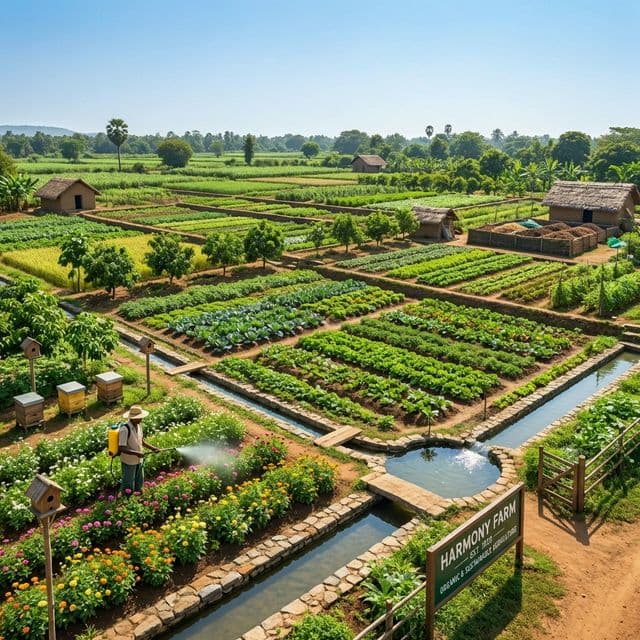
Sustainable Farming: Building a Resilient Future for India
Explore practical sustainable farming techniques like crop rotation, cover cropping, and integrated pest management to boost long-term soil health.
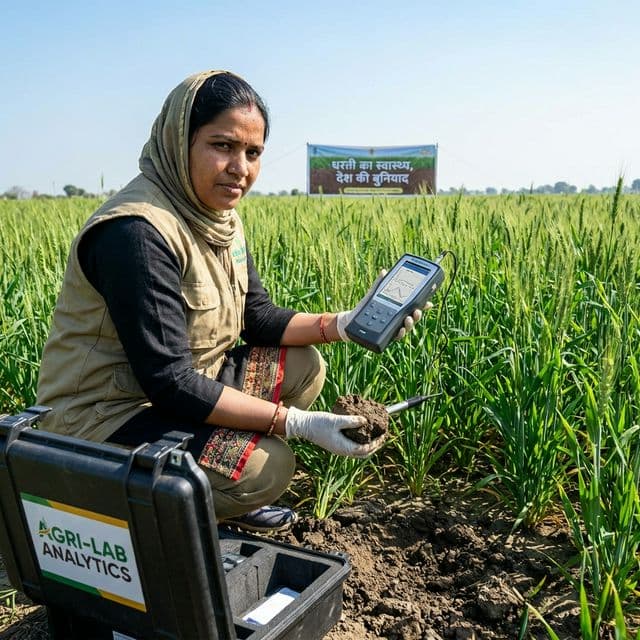
Soil Health: The Living Foundation of Your Farm
Understand why soil health matters more than just chemical NPK. Learn how to restore organic carbon and microbial life for sustainable yields.
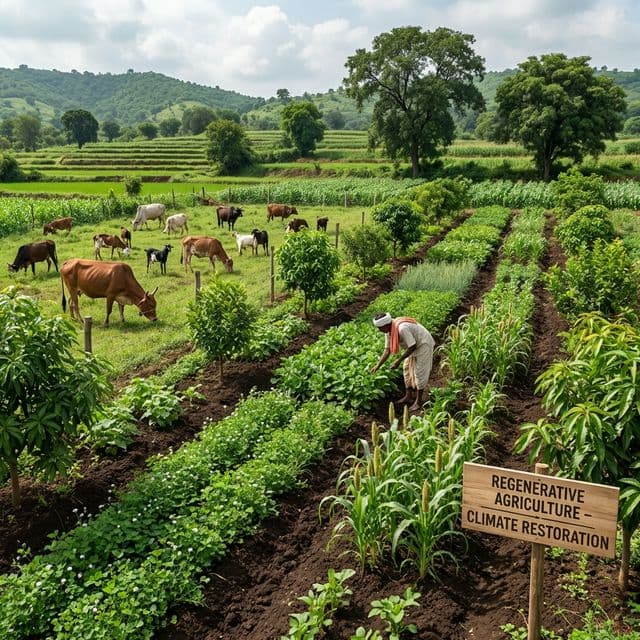
Regenerative Agriculture: Healing the Soil, Feeding the Family
Go beyond sustainable farming with regenerative practices. Focus on carbon sequestration, water retention, and local ecosystem restoration.