Share this guide
Help more farmers discover useful tools
Save Time
Instant access
More Benefits
Apply for schemes
Better Decisions
Real-time data
Transparent & Safe
Official platforms
Top 7 Low-Investment Business Ideas for Rural Women & Self-Help Groups (SHGs) in India
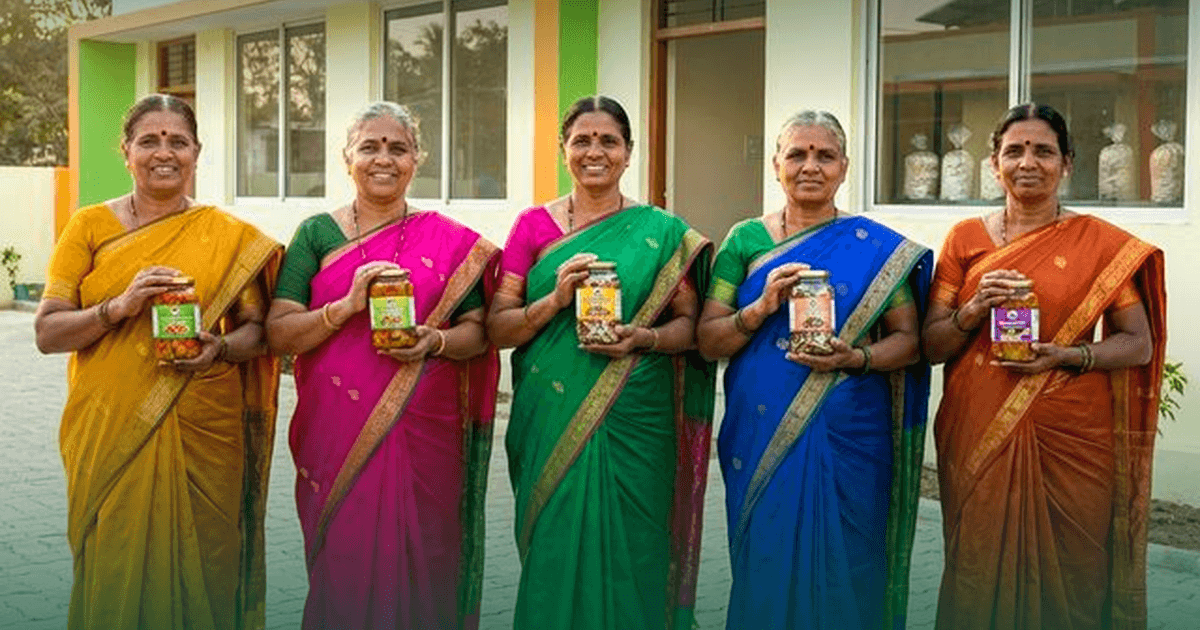
Rural women have long represented the unheralded backbone of Indian agriculture, performing over 70% of physical farm labor: sowing, transplanting, weeding, harvesting, and milking. However, traditional unpaid family labor rarely translates into personal financial autonomy. Under the Central Government's Lakhpati Didi Initiative (aimed at enabling 3 crore rural women to earn over ₹1,00,000 in net annual income), women-led Self-Help Groups (SHGs) now receive concessional credit, capital subsidies, and market branding support. Here are the top 7 high-margin, low-investment micro-enterprises rural women can launch with initial capital between ₹10,000 and ₹1,00,000.
1. Oyster Mushroom Cultivation (Dhingri Mushroom)
- Initial Investment: ₹15,000 to ₹25,000 (Spawn, straw, PP bags, spray nozzles). * Space Needed: A dark 12x12 ft ventilated spare room or thatched mud shed. * Production Cycle: Ready for first harvest in just 22 to 25 days. Substrate bags yield 3 harvesting flushes over 45 days. * Economics: Producing 150 kg fresh mushrooms monthly @ ₹180/kg wholesale generates ₹27,000/month revenue with operating costs under ₹8,000. * Value Addition: Sun-drying surplus mushrooms into mushroom soup powder and medicinal extracts commands 3x market value.
2. Traditional Wood-Churned Cold-Pressed (Kachi Ghani) Oils
Urban health-conscious consumers are actively fleeing refined chemical solvent oils in favor of traditional cold-pressed oils. * Setup: A compact 2 HP rotary wooden churner (Mara Chekku / Lakdi Ghani) processing mustard, sesame, peanut, and sunflower seeds. * Capital Cost: ₹80,000 to ₹1,20,000 (Financed via PMEGP or DAY-NRLM Community Investment Fund). * Margins: Cold-pressed peanut and mustard oils sell at ₹320 to ₹450 per liter, yielding net processing margins of 35% to 40%. The remaining dry oil cake (Khali) is sold locally as premium high-protein dairy feed.
3. Spice Processing, Custom Blending & Micro-Packaging
- Model: Purchasing raw turmeric fingers, coriander, dry red chilies, and cumin directly from village farmers, micro-pulverizing, blending authentic regional spice masalas (Garam Masala, Goda Masala, Sambar Powder), and packaging in 100g/250g nitrogen-sealed stand-up pouches. * Profitability: Unprocessed whole chili selling at ₹160/kg transforms into branded pure chili powder retailing at ₹340/kg. * Licensing: Simple online FSSAI basic registration (₹100/year) and free Udyam MSME registration.
4. Commercial Vermicompost & Enriched Bio-Fertilizer
- Zero Input Purchasing: Collect farm cow dung and crop harvest stubbles that would otherwise be burned. * Eisenia Fetida Earthworms: 5 elevated beds (30x4 ft) yield 2 tonnes of vermicompost every 60 days. * Earnings: 2 tonnes sold at ₹8/kg = ₹16,000 per cycle. Selling surplus earthworms to neighboring farmers at ₹300/kg adds an extra ₹15,000 per quarter.
5. Backyard Country Poultry & Country Egg Hatchery
- Desi Birds: Rearing 150 Kadaknath or Sonali birds on household grains, greens, and free-range foraging. * Incubator Model: A compact 200-egg automatic digital egg incubator costs just ₹7,000 to ₹10,000. Purchasing fertile desi eggs at ₹12 and selling day-old vaccinated chicks at ₹45 to ₹55 generates steady weekly income.
6. Fruit & Vegetable Dehydration (Solar Dryers)
- Dehydrating surplus seasonal crops (onion flakes, dry tomato slices, ginger powder, amla candy) using low-cost polyhouse tunnel solar dryers. * Prevents post-harvest distress dumping during peak market gluts and provides 12-month shelf life.
7. Custom Eco-Friendly Cloth & Jute Bag Manufacturing
- With widespread municipal bans on single-use plastic carry bags, local mandis, grocery shops, and seed retailers have high demand for durable cotton and jute bags. * Two semi-automatic heavy-duty sewing machines (₹18,000 each) operated by 4 SHG members can manufacture 500 bags daily.
Government Financial Support Architecture
| Scheme | Loan Amount | Interest Rate / Subsidy | Implementing Agency | |---|---|---|---| | DAY-NRLM (SHG Bank Linkage) | Up to ₹3,00,000 | Effective 4% interest (7% baseline with 3% prompt repayment subvention) | Rural Regional & Public Sector Banks | | PMMY (Pradhan Mantri Mudra Yojana) | Shishu: up to ₹50,000, Kishore: up to ₹5,00,000 | Collateral-free micro loans | All Commercial Banks & MFIs | | PMFME Scheme | Up to ₹10,00,000 | 35% Capital Credit-Linked Subsidy | Ministry of Food Processing Industries | | Lakhpati Didi Community Fund | ₹1,50,000 – ₹2,50,000 | Revolving grant for SHG village federations | State Rural Livelihoods Missions |
Frequently Asked Questions (FAQ)
Q1: Does an individual rural woman need to register a formal private company to start these businesses? No. Women can commence operations as an informal individual proprietorship or through their registered Self-Help Group (SHG). All that is required is an Aadhaar card, PAN card, basic FSSAI registration (for food items), and a free Udyam Registration certificate.
Q2: What is the main requirement to access the 35% PMFME subsidy for food processing? The enterprise must focus on the designated "One District One Product" (ODOP) of that district (e.g., Turmeric processing in Nanded, Tomato puree in Kolar, Banana chips in Jalgaon).
Direct Kisan Mandi
Sell or Source Direct from Verified Farmers
Connect with verified buyers and sellers across Indian mandis with zero brokerage on KhetiSetu Marketplace.
K
Written by KhetiSetu Women Empowerment Cell
Empowering Indian farmers with scientific agronomy, ICAR guidelines, and transparent digital tools.