Share this guide
Help more farmers discover useful tools
Save Time
Instant access
More Benefits
Apply for schemes
Better Decisions
Real-time data
Transparent & Safe
Official platforms
The Future of Agriculture: AI, IoT Soil Sensors, Smart Drones & Precision Farming in India
Indian agriculture is undergoing a generational shift from guesswork-based traditional cultivation to data-driven Precision Agriculture (Agri 4.0). Confronted with depleting water tables, erratic monsoon cycles, and severe agricultural labor deficits during peak harvesting seasons, technology adoption has accelerated across farming clusters. This technical overview explores how smart drones, internet-of-things (IoT) field telemetry, satellite imagery, and artificial intelligence are delivering double-digit yield enhancements while curbing chemical input waste.
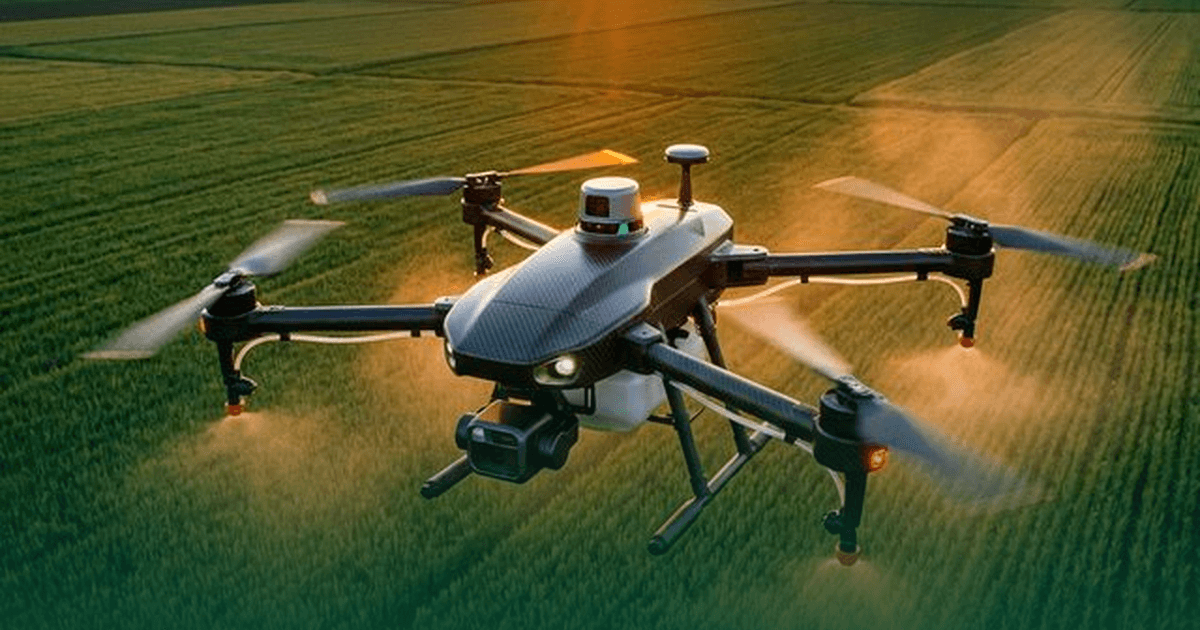
1. Kisan Drones: Revolutionizing Foliar Sprays & Crop Scouting
Agricultural drones are no longer experimental novelties; they represent the most viable solution to pesticide poisoning, water scarcity, and spray labor shortages:
- Ultra-Low Volume (ULV) Spraying: Traditional manual knapsack spraying requires 150 to 200 liters of water per acre and takes 4 to 6 hours of hazardous human labor. A calibrated 10-liter or 16-liter agricultural drone sprays 1 acre in just 7 to 10 minutes using only 10 to 12 liters of water. * Uniform Electrostatic Droplet Penetration: High-velocity downwash propels micronized droplets (100–150 microns) directly under leaf undersides where sucking pests (whiteflies, thrips, mites) reside, achieving 90% chemical efficacy. * Government Subsidies on Drones: Under the Sub-Mission on Agricultural Mechanization (SMAM), individual SC/ST, women, and small farmers receive up to 50% subsidy (up to ₹5 Lakhs) on agricultural drones. FPOs receive 75% financial assistance, and agricultural institutions (ICAR/KVK) receive 100% grants.
2. IoT Telemetry: Smart Irrigation & Real-Time Soil Sensing
Over-irrigation is as catastrophic as drought stress, leaching valuable nitrogen into groundwater and promoting root rot (Phytophthora). IoT-enabled field hardware provides sub-surface intelligence: | Technology | Hardware Setup | Agronomic Benefit | |---|---|---| | Soil Moisture Tensiometers | Buried at 15 cm and 30 cm root depths | Measures soil water matric potential in kilopascals (kPa), preventing irrigation until actual root depletion occurs | | Optical NPK Sensors | Optical reflectance probes | Estimates available nitrate, phosphate, and potassium ions in root zones in real time | | Automated Solenoid Valves | Solar-powered GSM valves | Automatically activates drip irrigation when soil moisture drops below threshold (e.g., 35%) and shuts off once field capacity is reached | | Micro-Weather Stations | Farm-gate temperature, humidity, leaf wetness sensors | Predicts fungal spore germination hours in advance, alerting farmers before visible blight spots appear |
3. Satellite Remote Sensing & Computer Vision AI
- NDVI (Normalized Difference Vegetation Index): By analyzing Sentinel-2 and Planet satellite spectral reflectance in Near-Infrared (NIR) and Red bands, smartphone apps map vigor variations across a 10-acre plot. Red patches indicate localized nitrogen deficiency or irrigation choke points invisible to the naked eye. * AI Plant Pathology Diagnostics: Utilizing deep convolutional neural networks (CNNs), tools like the KhetiSetu Plant Clinic allow farmers to photograph an infected leaf with a standard budget smartphone. In under 3 seconds, the model classifies the pathogen (e.g., Bacterial Blight vs Cercospora Leaf Spot) and prescribes targeted, non-phytotoxic molecules.
4. Economic Payback Analysis for Smallholders
While individual purchase of drones or sensor stations is cost-prohibitive for 2-acre farmers, the Custom Hiring Center (CHC) shared economy model makes cutting-edge precision farming accessible:
- Drone Spray Hiring Rate: ₹350 – ₹450 per acre (cheaper than 2 manual spray laborers charging ₹600–₹800/day). * Water Savings: 90% reduction in water hauling labor. * Fertilizer Optimization: Micro-dosing soluble fertilizers based on sensor telemetry slashes chemical bills by ₹1,500 – ₹2,500 per acre.
Frequently Asked Questions (FAQ)
Q1: Does a farmer need a commercial pilot license to fly an agricultural drone in India? Yes. Under the Drone Rules 2021 framed by the Directorate General of Civil Aviation (DGCA), flying an agricultural drone requires a Remote Pilot Certificate (RPC) issued by a DGCA-authorized Remote Pilot Training Organization (RPTO). The training curriculum spans 5 days and covers flight controls, weather assessment, and safe chemical handling.
Q2: Can drone spraying be done during windy weather? No. Drone spraying should never be conducted when wind speeds exceed 12 km/h (approx. 3.3 m/s) or during peak afternoon hours when thermal air updrafts cause pesticide droplets to evaporate or drift onto neighboring sensitive crops.
Zero Middlemen
Need Verified Farm Machinery on Rent?
Book modern tractors, harvesters, and implement attachments from verified local farm owners at fair daily rates.
K
Written by KhetiSetu Precision Agriculture Team
Empowering Indian farmers with scientific agronomy, ICAR guidelines, and transparent digital tools.